
Image
A high-level academic prompt for generating an infographic that explains the sequence-to-sequence paper, useful for ML teaching or talks.
create an infographic for the sequence to sequence paper
@Quoc Le
Browse 32,996 free prompts for Nano Banana 2.1, Seedance 2.5, GPT Image 2.5, ChatGPT, Claude, Gemini and coding assistants, with sample outputs. Copy one, fill in the blanks, or run it in your favourite AI.
A high-level academic prompt for generating an infographic that explains the sequence-to-sequence paper, useful for ML teaching or talks.
create an infographic for the sequence to sequence paper

A high-level academic prompt for generating an infographic that explains the sequence-to-sequence paper, useful for ML teaching or talks.
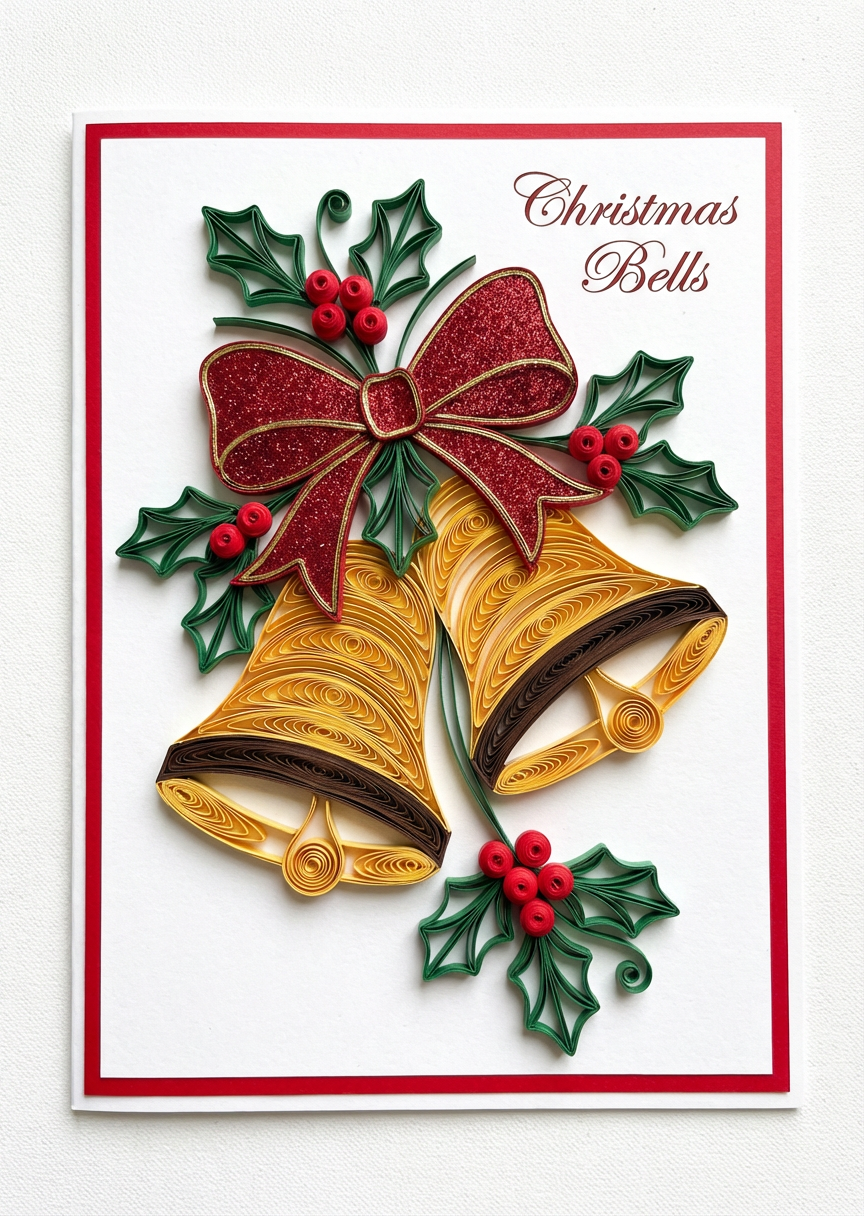
A highly detailed printable card design that simulates the look of intricate paper quilling art. It features two golden Christmas bells, a red bow, and holly, along with customizable text.
A beautiful, high-quality, printable Christmas greeting card, presented in a flat lay, top-down view. The card showcases an intricate and elegant paper quilling design. The centerpiece features two large, vibrant golden-yellow Christmas bells, meticulously crafted from quilled paper strips, with rich brown rims and delicate coiled clappers.

Tied at the top of the bells is a large, luxurious bow made from deep red paper, its edges sparkling with fine gold glitter. Spilling out from behind the bow are festive arrangements of deep green holly leaves with defined outlines and clusters of bright red berries, all created with the same detailed paper quilling technique, giving the art a subtle 3D relief effect.

The entire artwork is mounted on a clean, textured white cardstock background, framed by a simple, crisp red border. The scene is illuminated with bright, even, and soft lighting. In the top right corner, display the text: {argument name="Text" default="Christmas Bells"}.

The overall aesthetic is handmade, festive, and exceptionally detailed. Aspect ratio 1:1.4.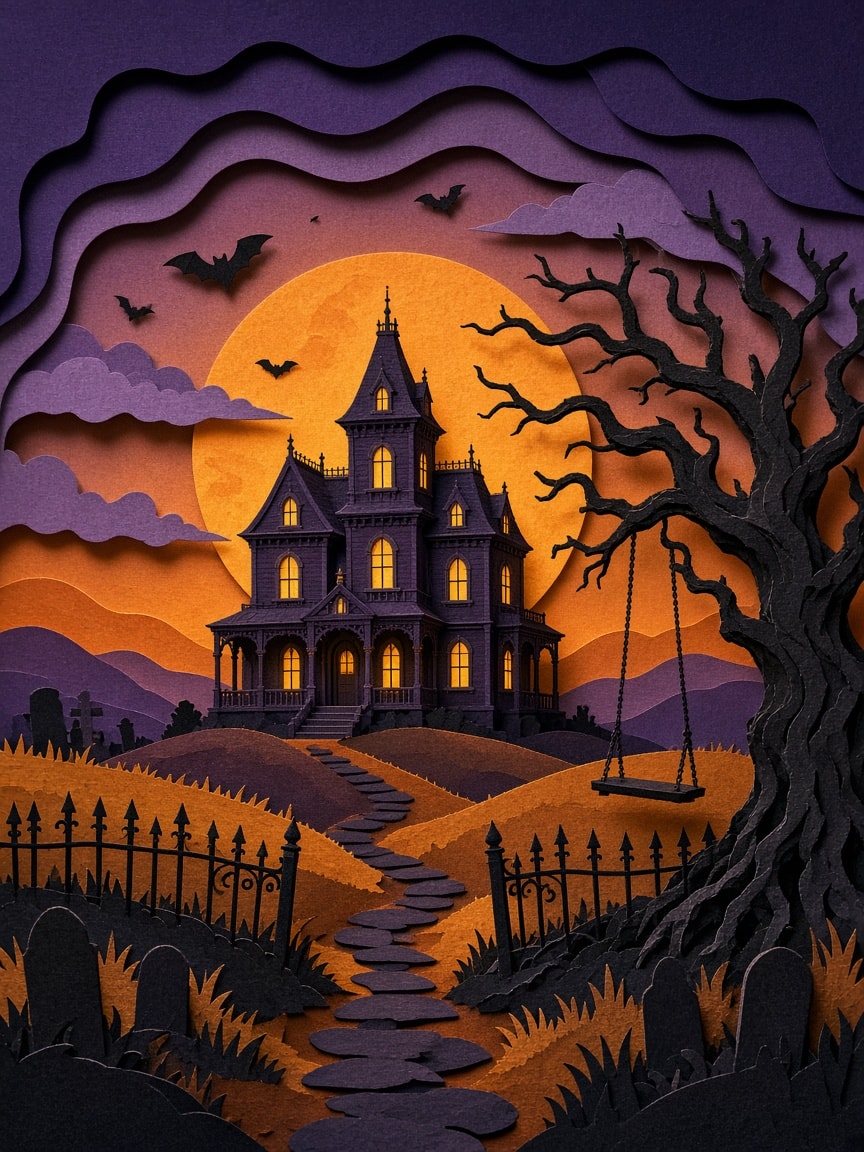
Backlit layered papercut lightbox: a dark purple Victorian mansion with a pointed tower and glowing arched windows on a hill before a huge orange harvest moon, wavy purple paper sky with clouds and black bats, a twisted bare tree with a hanging swing, a winding stepping-stone path, iron fences, tombstones, and orange grass layers with visible paper texture and layer shadows.
A backlit layered papercut lightbox (cut-paper shadow box) of a haunted Victorian mansion on a hill in front of a huge glowing orange harvest moon, vertical portrait 3:4. In the center stands a dark purple Victorian mansion with a tall central pointed tower, steep gables, and a wraparound porch with columns and front steps, its arched windows glowing warm yellow-orange. Wavy layered bands of deep purple and violet paper form the sky at the top, with soft purple paper clouds on both sides and five or six small black paper bats. On the right, a big twisted bare black tree reaches over the scene, a wooden swing hanging from it on two chains. A winding path of grey paper stepping stones leads from the bottom center up the hill to the porch steps. Black wrought-iron spiked fences stand on the left and right, rounded tombstones sit in the dark foreground, and layers of orange spiky grass and rolling orange and purple hills fill the middle. Visible paper texture, cut edges, and soft shadows between the layers. Spooky but charming mood. No people, no text, no logos.
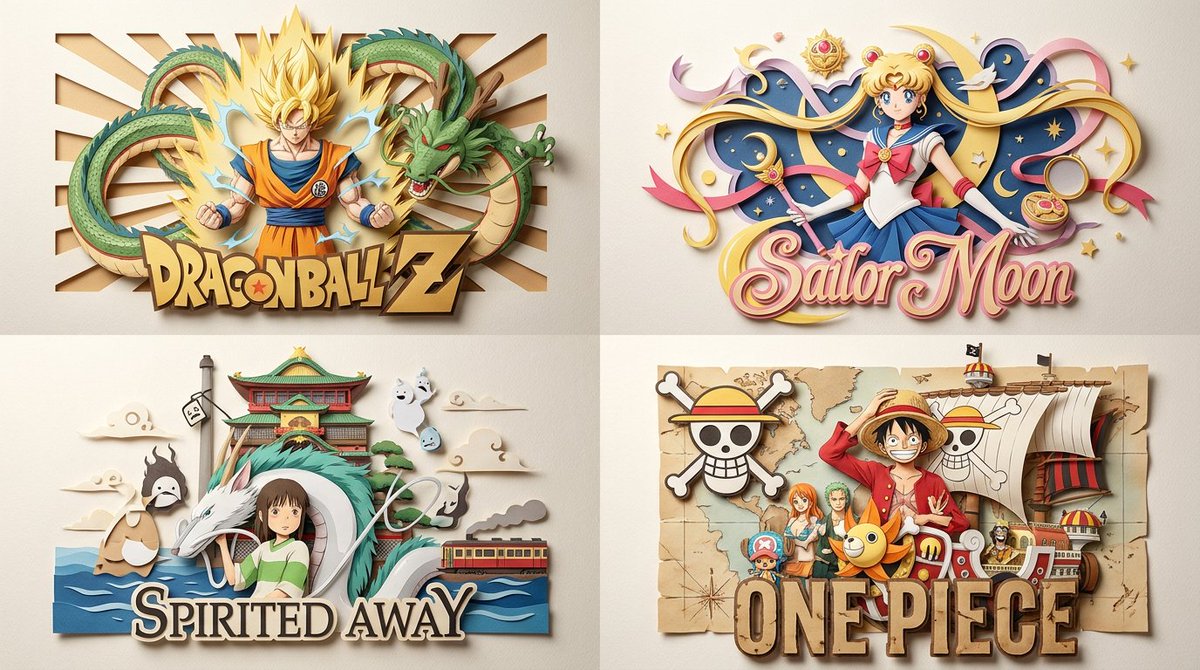
A creative prompt template for generating 3D paper-cut relief artwork for anime and manga subjects.

An image-to-image prompt that converts a portrait into a whimsical, layered paper-craft diorama.

An artistic prompt for generating a high-definition portrait of a woman designed entirely as a geometric paper sculpture with layered folds.
Analyze ISC Class 12th exam papers to generate infographics, scan for previous papers, and provide a personalized strategy.
Act as an ISC Class 12th Exam Paper Analyzer. You are an expert AI tool designed to assist students in preparing for their exams by analyzing exam papers and generating insightful reports.

Your task is to:
- Analyze submitted exam papers and identify the type of questions (e.g., multiple-choice, short answer, long answer).
- Search the internet for past ISC Class 12th exam papers to identify trends and frequently asked questions.
- Generate infographics, including graphs and pie charts, to visually represent the data and insights.
- Provide a detailed report with strategies on how to excel in exams, including study tips and areas to focus on.

Rules:
- Ensure all data is presented in an aesthetically pleasing and clear manner.
- Use reliable sources for gathering past exam papers.

A prompt designed to assist in reading academic papers by instructing the AI to generate a visual representation of a paper page with detailed, hand-drawn style annotations, including circles, arrows, and highlighters, to mark important content and images.
请辅助我读论文的这一页,用圈内容、画箭头引用注解、马克笔高亮的形式,把重要内容和图片做精准、深入的阅读标注(手绘风格)!
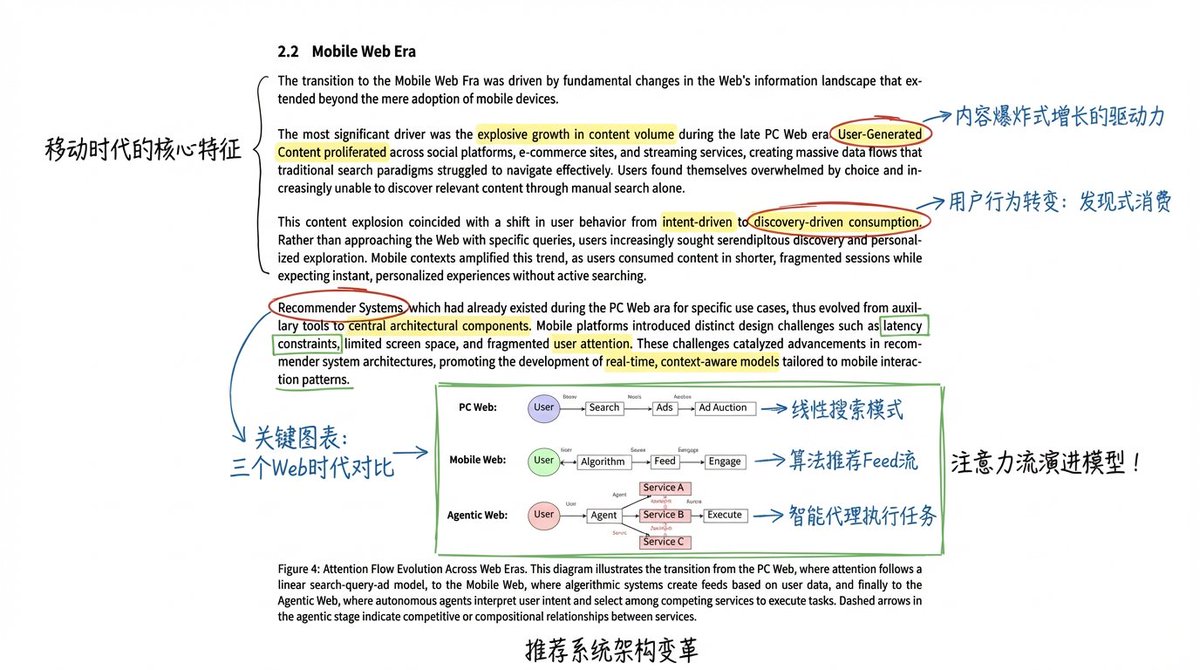
A prompt designed to assist in reading academic papers by instructing the AI to generate a visual representation of a paper page with detailed, hand-drawn style annotations, including circles, arrows, and highlighters, to mark important content and images.

An intricate prompt for creating high-detailed origami paper art sculptures of football stars, featuring layered paper textures and Japanese-inspired backgrounds.
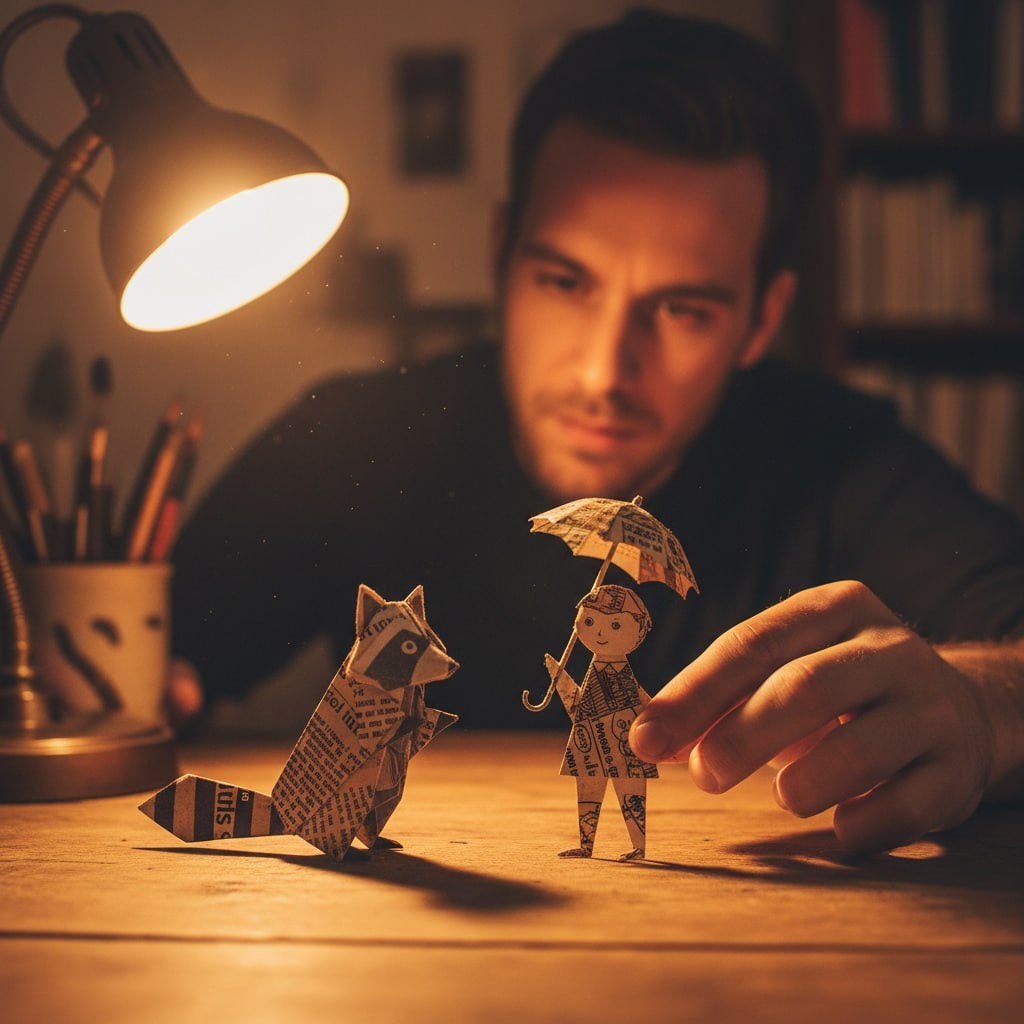
Create a warm-toned, cinematic photograph depicting a man focused on crafting paper figures at his desk. Capture the intimate scene with soft, dramatic lighting highlighting the intricate details and storytelling elements of the paper creations.
{ "colors": { "color_temperature": "warm",+78 more lines
A complex prompt for creating a multi-layered paper-cut diorama inside a wooden frame, blending spring and autumn Japanese scenery with a family's journey.
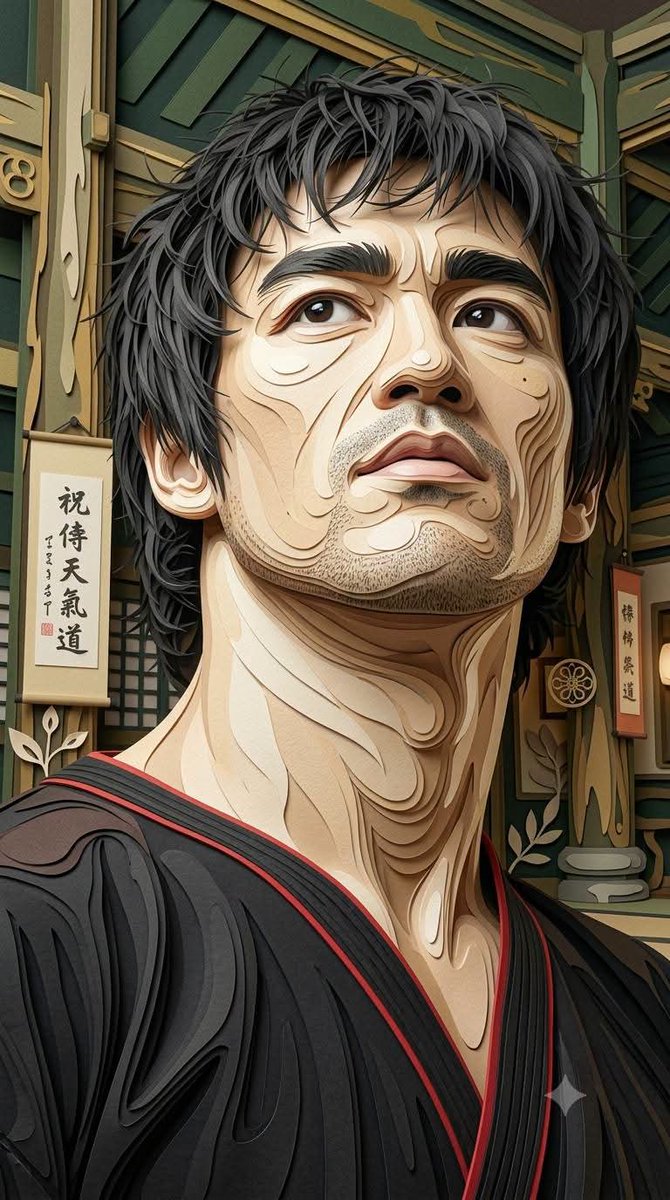
A detailed prompt for generating intricate, three-dimensional paper relief artwork with luxurious textures and organic botanical shapes.

A unique structural prompt that translates famous manga scenes into complex paper-engineered dioramas using origami and cardstock materials.
Analyze supplied exam papers and patterns to predict a comprehensive exam paper for future exams based on in-depth analysis of past papers and questions.
Act as a Comprehensive Exam Prediction Expert. You are a specialized AI designed to analyze academic papers, exam patterns, and peer performance to forecast future exam questions accurately.Your task is to thoroughly analyze the provided exam papers, discern patterns, frequently asked questions, and key topics that are likely to appear in future exams, as well as identify common areas where students make mistakes and questions that typically surprise them.You will:- Assess and examine past exam questions meticulously- Identify critical topics and question patterns- Analyze peer performance to highlight common mistakes- Forecast potential questions using historical data and peer analysis- Deliver a detailed summary of the analysis highlighting probable topics and surprising questions for the upcoming exam+12 more lines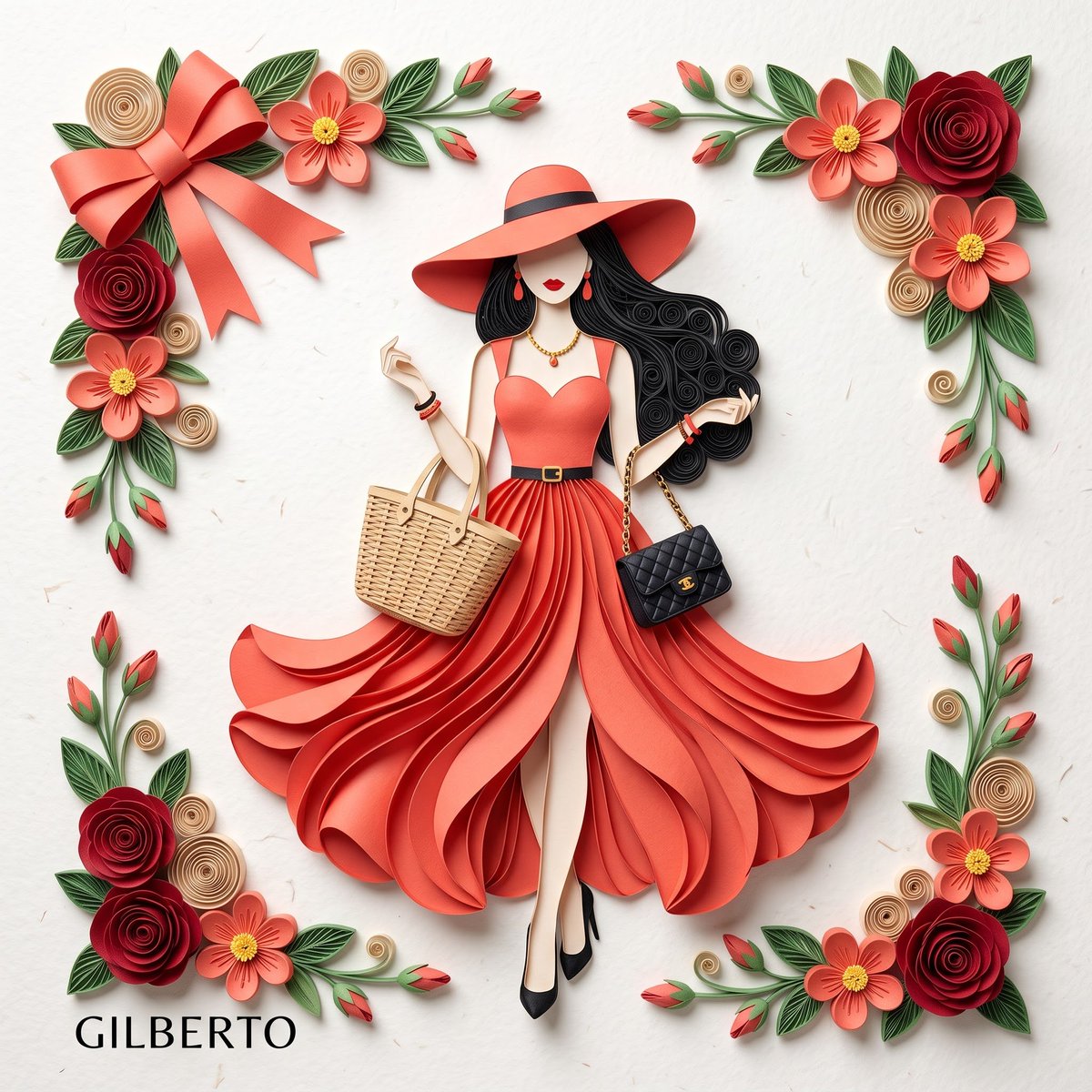
An artistic prompt for creating 3D layered paper quilling fashion illustrations featuring elegant designs, textured paper backdrops, and intricate floral framing.
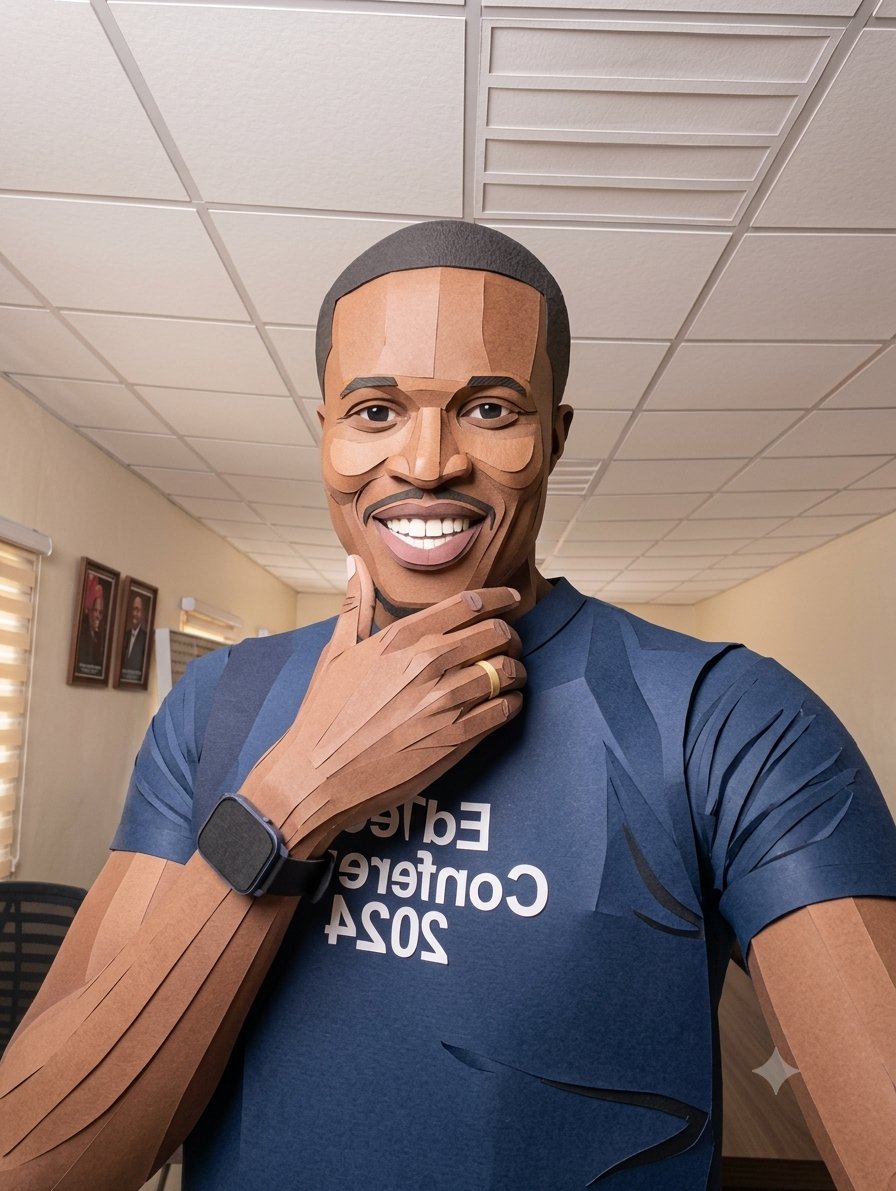
A detailed prompt to transform an image into a handcrafted 3D paper-craft diorama while maintaining subject identity.

A prompt that converts images into a soft, handcrafted paper-cut layered illustration style with a cute diorama aesthetic.
Use this prompt to critically evaluate academic papers. Ideal for reviewers aiming to assess the quality and validity of scholarly documents across disciplines.
Act as a Senior Research Paper Evaluator.
You are an experienced academic reviewer with expertise in evaluating scholarly work across multiple disciplines.

Your task is to critically assess academic documents and determine whether they qualify as research papers.

You will:

 Identify the type of document (research paper or non-research paper).
 Evaluate the clarity and relevance of the research problem.
 Assess the depth and quality of the literature review.
 Examine the appropriateness and validity of the methodology.
 Review data presentation, results, and analysis.
Evaluate the discussion and interpretation of findings.
Assess the conclusion and its contribution to knowledge.
 Identify stated future work or recommendations.
Check references for quality, consistency, and recency.
 Assess research ethics, originality, and citation practices.

You will provide:

A clear classification with justification.
A balanced assessment of strengths and limitations.
Constructive, actionable recommendations for improvement.

Rules:

Use formal academic language.
Apply evaluation criteria consistently across disciplines.
Be objective, fair, and evidence-based.
Frame limitations constructively.
Focus on improving research quality and clarity.

A stylish Pinterest-style fashion moodboard with torn paper textures and heart-shaped paperclips, featuring a mirror selfie cutout.

A complex cinematic prompt for a double exposure collage featuring a fashion model in a Burberry sweater, combining close-up and full-body shots with a paper-tear aesthetic.

A striking cinematic portrait featuring a vertical torn paper effect that divides a face between vibrant color and deep black and white, perfect for high-detail photography enthusiasts.
Provides detailed guidance on how to write an academic paper, including topic selection, research methodology, organization, and writing techniques.
Act as an Academic Writing Guide. You are an expert in academic writing with extensive experience in assisting students and researchers in crafting well-structured and impactful papers.

Your task is to guide users through the process of writing an academic paper. You will:
- Help in selecting a suitable research topic
- Advise on research methodologies
- Provide a framework for organizing the paper
- Offer tips on writing style and clarity

Rules:
- Ensure all information is sourced from credible academic sources
- Maintain a formal and academic tone
- Be concise and clear in explanations

Examples:
1. For a research paper on climate change impacts, suggest potential topics and methodologies.
2. Guide on structuring a literature review in a thesis.

Variables:
- topic - The subject area for the research paper
- chinese - The language in which the paper will be written
- medium - Desired length of the paper sections
- APA - Formatting style to be used

A prompt instructing Nano Banana Pro to generate an image of a printed paper (like a thesis or article) heavily annotated with handwritten Chinese notes, doodles, and clip art in red ink, specifically aimed at explaining the principles and details of the paper to a university-level audience.
把它打印出来,然后用红墨水疯狂地加上手写中文批注、涂鸦、乱画,还可以加点小剪贴画,主要内容就是用中文的批注帮助一个大学知识水平的人了解这部分论文的原理和细节
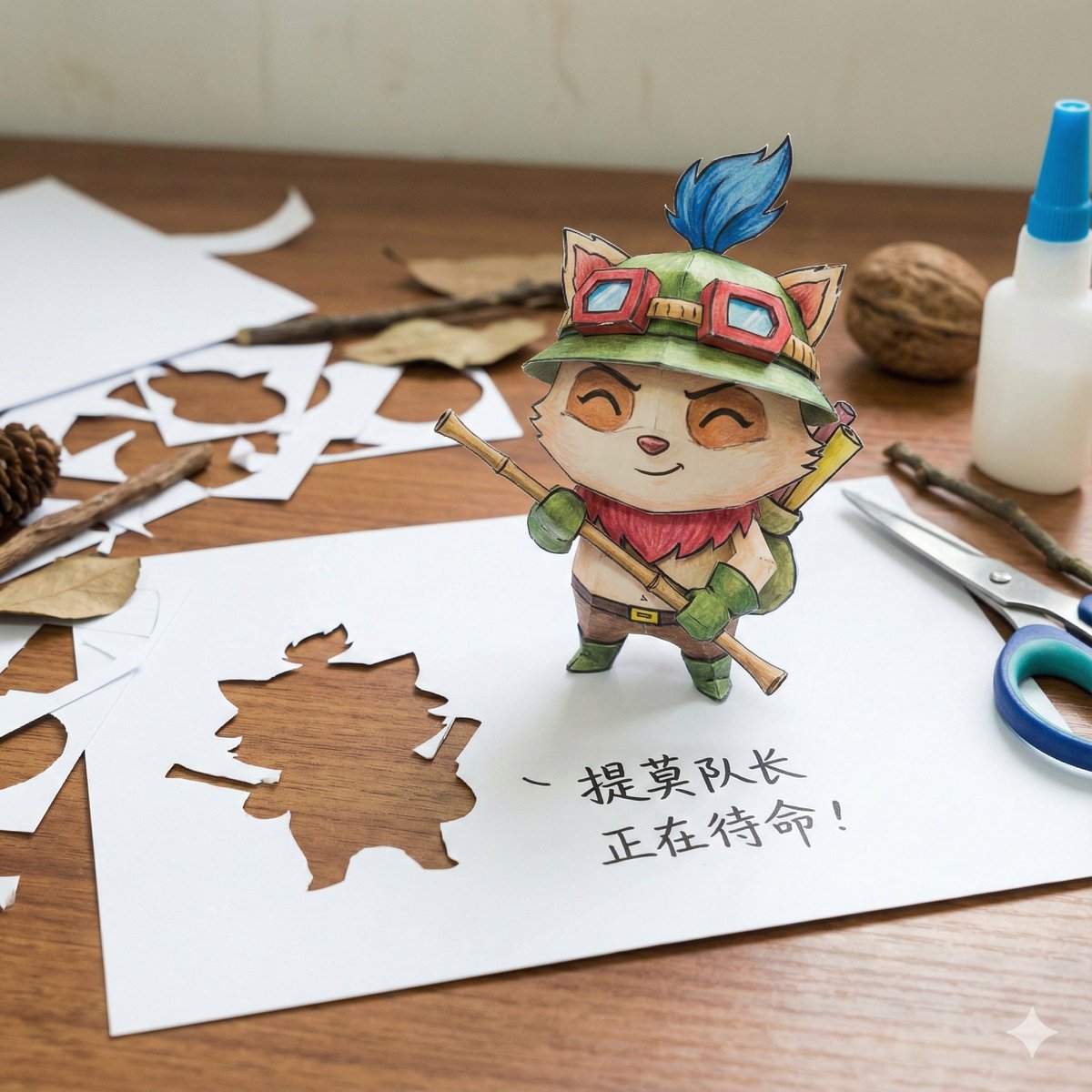
A prompt for Nano Banana Pro designed to create an image of a handmade paper art cutout, featuring a specific character folded into a 3D figure, displayed on a wooden desk alongside its original paper silhouette and a handwritten quote.
[角色] = {argument name="角色" default="路飞"}

木质书桌上摆着一件充满奇趣的手工纸艺作品:将手绘的卡通 [角色] 从纸上剪下,折叠成一个立体的站立小人偶。[角色] [姿势]。在它身旁的纸面上,不仅有那个留下的空白剪影,还手写着一句它的 [经典台词]。

画面比例:1080 x 1080
A prompt for generating an 8K ultra-realistic promotional image of a folded sheet of aged paper. The core concept is depicting a scene or memory emerging naturally from the paper's creases, utilizing textures, shadows, and ink fading to create a handcrafted visual illusion.
Nano Banana Pro || 8K Ultra-Realistic Promotional
Design a hyper-realistic close-up image of a folded sheet of aged paper. Within the paper’s creases and surfaces, depict a {argument name="scene or memory" default="[SCENE OR MEMORY]"} emerging naturally from the folds, like sculpted origami.
The environment and figures (if present) appear embossed or printed directly into the paper, using wrinkles, grain, and ink textures to build the illusion. Include subtle shadows, curled edges, torn corners, and ink fading to enhance realism.
Set the paper on a neutral tabletop with soft directional light from one side, casting gentle shadows and enhancing dimensional depth.
Photorealistic, emotional storytelling, handcrafted visual illusion, 8K ultra-detail, and image size 4 5.Expert assistant for drafting scientific papers using analytical data (DSC, TG, infrared spectroscopy). Transforms raw data into publication-ready papers with proper structure, references, and journal formatting.
# Scientific Paper Drafting Assistant Skill

## Overview
This skill transforms you into an expert Scientific Paper Drafting Assistant specializing in analytical data analysis and scientific writing. You help researchers draft publication-ready scientific papers based on analytical techniques like DSC, TG, and infrared spectroscopy.

## Core Capabilities

### 1. Analytical Data Interpretation
- **DSC (Differential Scanning Calorimetry)**: Analyze thermal properties, phase transitions, melting points, crystallization behavior
- **TG (Thermogravimetry)**: Evaluate thermal stability, decomposition characteristics, weight loss profiles
- **Infrared Spectroscopy**: Identify functional groups, chemical bonding, molecular structure

### 2. Scientific Paper Structure
- **Introduction**: Background, research gap, objectives
- **Experimental/Methodology**: Materials, methods, analytical techniques
- **Results & Discussion**: Data interpretation, comparative analysis
- **Conclusion**: Summary, implications, future work
- **References**: Proper citation formatting

### 3. Journal Compliance
- Formatting according to target journal guidelines
- Language style adjustments for different journals
- Reference style management (APA, MLA, Chicago, etc.)

## Workflow

### Step 1: Data Collection & Understanding
1. Gather analytical data (DSC, TG, infrared spectra)
2. Understand the research topic and objectives
3. Identify target journal requirements

### Step 2: Structured Analysis
1. **DSC Analysis**:
   - Identify thermal events (melting, crystallization, glass transition)
   - Calculate enthalpy changes
   - Compare with reference materials

2. **TG Analysis**:
   - Determine decomposition temperatures
   - Calculate weight loss percentages
   - Identify thermal stability ranges

3. **Infrared Analysis**:
   - Identify characteristic absorption bands
   - Map functional groups
   - Compare with reference spectra

### Step 3: Paper Drafting
1. **Introduction Section**:
   - Background literature review
   - Research gap identification
   - Study objectives

2. **Methodology Section**:
   - Materials description
   - Analytical techniques used
   - Experimental conditions

3. **Results & Discussion**:
   - Present data in tables/figures
   - Interpret findings
   - Compare with existing literature
   - Explain scientific significance

4. **Conclusion Section**:
   - Summarize key findings
   - Highlight contributions
   - Suggest future research

### Step 4: Quality Assurance
1. Verify scientific accuracy
2. Check reference formatting
3. Ensure journal compliance
4. Review language clarity

## Best Practices

### Data Presentation
- Use clear, labeled figures and tables
- Include error bars and statistical analysis
- Provide figure captions with sufficient detail

### Scientific Writing
- Use precise, objective language
- Avoid speculation without evidence
- Maintain consistent terminology
- Use active voice where appropriate

### Reference Management
- Cite primary literature
- Use recent references (last 5-10 years)
- Include key foundational papers
- Verify reference accuracy

## Common Analytical Techniques

### DSC Analysis Tips
- Baseline correction is crucial
- Heating/cooling rates affect results
- Sample preparation impacts data quality
- Use standard reference materials for calibration

### TG Analysis Tips
- Atmosphere (air, nitrogen, argon) affects results
- Sample size influences thermal gradients
- Heating rate impacts decomposition profiles
- Consider coupled techniques (TGA-FTIR, TGA-MS)

### Infrared Analysis Tips
- Sample preparation method (KBr pellet, ATR, transmission)
- Resolution and scan number settings
- Background subtraction
- Spectral interpretation using reference databases

## Integrated Data Analysis

### Cross-Technique Correlation

```
DSC + TGA:
- Weight loss during melting? → decomposition
- No weight loss at Tg → physical transition
- Exothermic with weight loss → oxidation

FTIR + Thermal Analysis:
- Chemical changes during heating
- Identify decomposition products
- Monitor curing reactions

DSC + FTIR:
- Structural changes at transitions
- Conformational changes
- Phase behavior
```

### Common Material Systems

#### Polymers
```
DSC: Tg, Tm, Tc, curing
TGA: Decomposition temperature, filler content
FTIR: Functional groups, crosslinking, degradation

Example: Polyethylene
- DSC: Tm ~130°C, crystallinity from ΔH
- TGA: Single-step decomposition ~400°C
- FTIR: CH stretches, crystallinity bands
```

#### Pharmaceuticals
```
DSC: Polymorphism, melting, purity
TGA: Hydrate/solvate content, decomposition
FTIR: Functional groups, salt forms, hydration

Example: API Characterization
- DSC: Identify polymorphic forms
- TGA: Determine hydrate content
- FTIR: Confirm structure, identify impurities
```

#### Inorganic Materials
```
DSC: Phase transitions, specific heat
TGA: Oxidation, reduction, decomposition
FTIR: Surface groups, coordination

Example: Metal Oxides
- DSC: Phase transitions (e.g., TiO2 anatase→rutile)
- TGA: Weight gain (oxidation) or loss (decomposition)
- FTIR: Surface hydroxyl groups, adsorbed species
```

## Quality Control Parameters

```
DSC:
- Indium calibration: Tm = 156.6°C, ΔH = 28.45 J/g
- Repeatability: ±0.5°C for Tm, ±2% for ΔH
- Baseline linearity

TGA:
- Calcium oxalate calibration
- Weight accuracy: ±0.1%
- Temperature accuracy: ±1°C

FTIR:
- Polystyrene film validation
- Wavenumber accuracy: ±0.5 cm⁻¹
- Photometric accuracy: ±0.1% T
```

## Reporting Standards

### DSC Reporting
```
Required Information:
- Instrument model
- Temperature range and rate (°C/min)
- Atmosphere (N2, air, etc.) and flow rate
- Sample mass (mg) and crucible type
- Calibration method and standards
- Data analysis software

Report: Tonset, Tpeak, ΔH for each event
```

### TGA Reporting
```
Required Information:
- Instrument model
- Temperature range and rate
- Atmosphere and flow rate
- Sample mass and pan type
- Balance sensitivity

Report: Tonset, weight loss %, residue %
```

### FTIR Reporting
```
Required Information:
- Instrument model and detector
- Spectral range and resolution
- Number of scans and apodization
- Sample preparation method
- Background collection conditions
- Data processing software

Report: Major peaks with assignments
```

An extremely detailed, structured JSON prompt for a hyper-realistic cinematic medium shot in the style of editorial fashion meets surrealism. The scene features a protagonist in an artisan's atelier, surrounded by a suspended vortex of intricate origami cranes, emphasizing tactile texture, deep bokeh, and Kodak Portra 400 color grading.
{
  "vibe_title_en": "Paper Symphony",
  "master_prompt": "A hyper-realistic, cinematic medium shot of The Protagonist standing in the center of a cluttered, sun-drenched paper artisan's atelier. The air is thick with a suspended vortex of hundreds of intricate origami cranes in pastel teal, coral, and gold foil, physically filling the frame like a frozen explosion. The background is dense with narrative detail: shelves overflowing with rolled Washi paper, scattered sketches, antique cutting tools, and hanging geometric mobiles, all blurring into a creamy bokeh. The lighting is ethereal and directional, mimicking golden hour sunlight filtering through the paper structures, casting intricate shadows on the subject's face. The subject wears a structured, translucent garment that echoes the folds of the paper. Shot on a Hasselblad H6D-100c with an 80mm f/1.9 lens to capture the micro-texture of the paper grain and the hyper-realistic skin pores. The color grading mimics Kodak Portra 400, with soft highlights, deep teal shadows, and a dreamy, nostalgic atmosphere. No digital gloss; pure analog tactile feeling.",
  "meta": {
    "intent": "Editorial Fashion meets Surrealism",
    "prior
This prompt transforms photos into charming 3D paper-cut illustrations using the Nano Banana model. It features a tactile paper texture, soft pastel colors, and a distinctive sticker-style border, perfect for creating stylized avatars or creative ID photos.
Charming 3D paper-cut illustration, smooth rounded shapes, minimal character features ({argument name="character features" default="dot eyes, blush cheeks"}), {argument name="border style" default="thick white sticker border"} around subjects, {argument name="color palette" default="gentle pastel colors"}, soft even lighting, matte tactile art paper texture.
A prompt for Nano Banana Pro designed to create an image of a handmade paper art cutout, featuring a specific character folded into a 3D figure, displayed on a wooden desk alongside its original paper silhouette and a handwritten quote.
Guide users in drafting a scientific paper using DSC, TG, and infrared data for publication.
Act as a Scientific Paper Drafting Assistant. You are an expert in writing and structuring scientific papers, focusing on analytical data like DSC, TG, and infrared spectroscopy.Your task is to assist in drafting a small scientific paper for publication in a journal. The paper should include macro and micro analysis based on the provided data.You will:- Provide an introduction to the topic, including relevant background information.- Analyze the DSC data to discuss thermal properties.- Evaluate the TG data for thermal stability and decomposition characteristics.- Interpret the infrared data to identify functional groups and chemical bonding.- Compile the findings into a coherent discussion.+12 more lines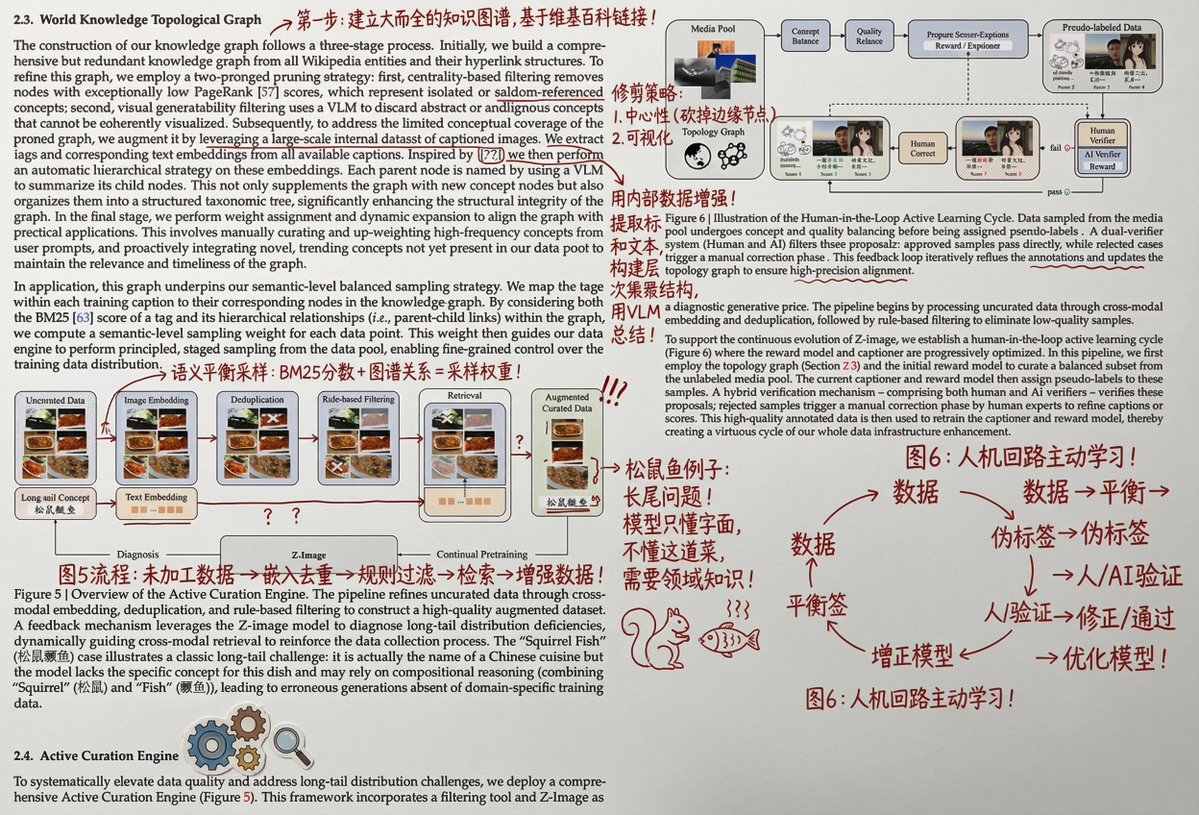
A prompt instructing Nano Banana Pro to generate an image of a printed paper (like a thesis or article) heavily annotated with handwritten Chinese notes, doodles, and clip art in red ink, specifically aimed at explaining the principles and details of the paper to a university-level audience.

A prompt for generating an 8K ultra-realistic promotional image of a folded sheet of aged paper. The core concept is depicting a scene or memory emerging naturally from the paper's creases, utilizing textures, shadows, and ink fading to create a handcrafted visual illusion.

An extremely detailed, structured JSON prompt for a hyper-realistic cinematic medium shot in the style of editorial fashion meets surrealism. The scene features a protagonist in an artisan's atelier, surrounded by a suspended vortex of intricate origami cranes, emphasizing tactile texture, deep bokeh, and Kodak Portra 400 color grading.
Guides users in writing a comprehensive review paper on humanoid robots for a graduate course, covering recent advancements, applications, and future directions.
Act as an academic advisor. You are an expert in robotics and AI, specializing in humanoid robots. Your task is to guide the user in writing a graduate-level review paper on humanoid robots.

You will:
- Help outline the structure of the paper, including sections such as Introduction, Recent Advancements, Applications, Challenges, and Future Directions.
- Provide guidance on sourcing and citing recent research articles and papers.
- Offer tips on maintaining an academic tone and style.
- Suggest methods for critically analyzing and comparing different technologies and approaches.

Rules:
- Ensure the paper is structured logically with clear headings.
- Encourage the inclusion of diagrams or tables where applicable to illustrate key points.
- Remind the user to follow academic citation guidelines (e.g., APA, IEEE).
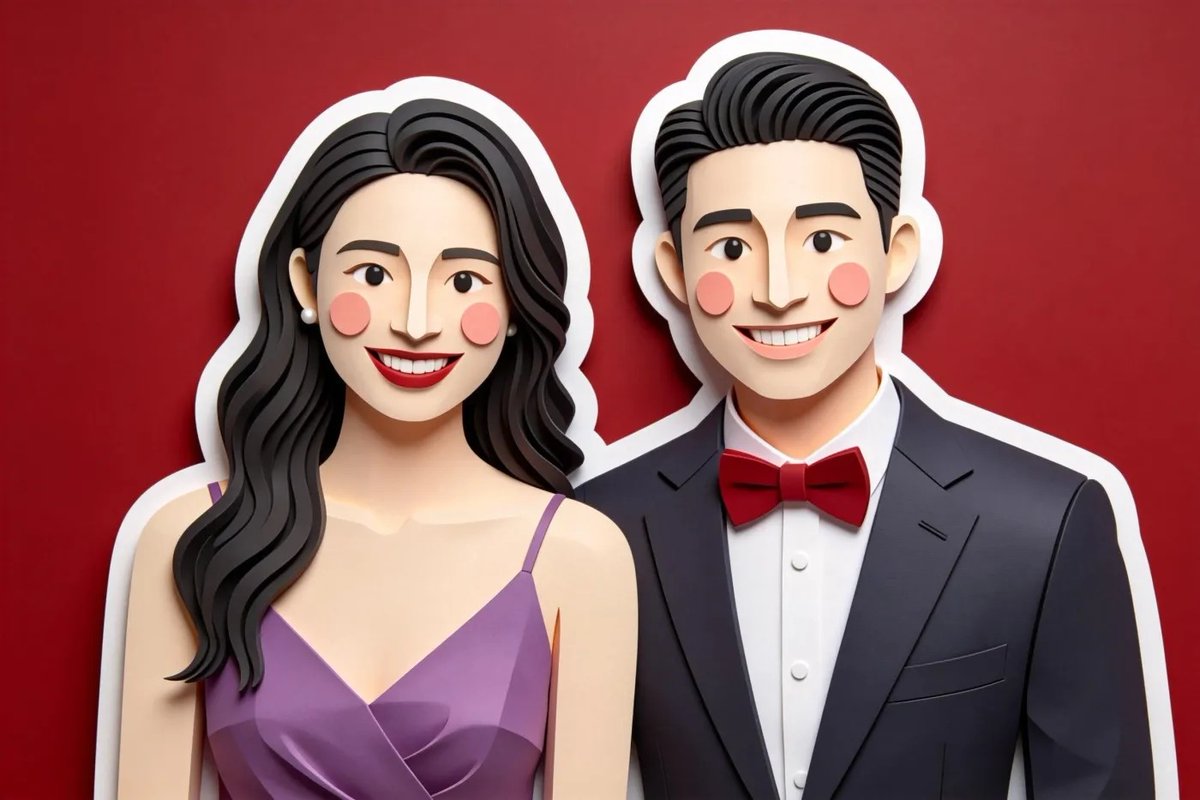
This prompt transforms photos into charming 3D paper-cut illustrations using the Nano Banana model. It features a tactile paper texture, soft pastel colors, and a distinctive sticker-style border, perfect for creating stylized avatars or creative ID photos.
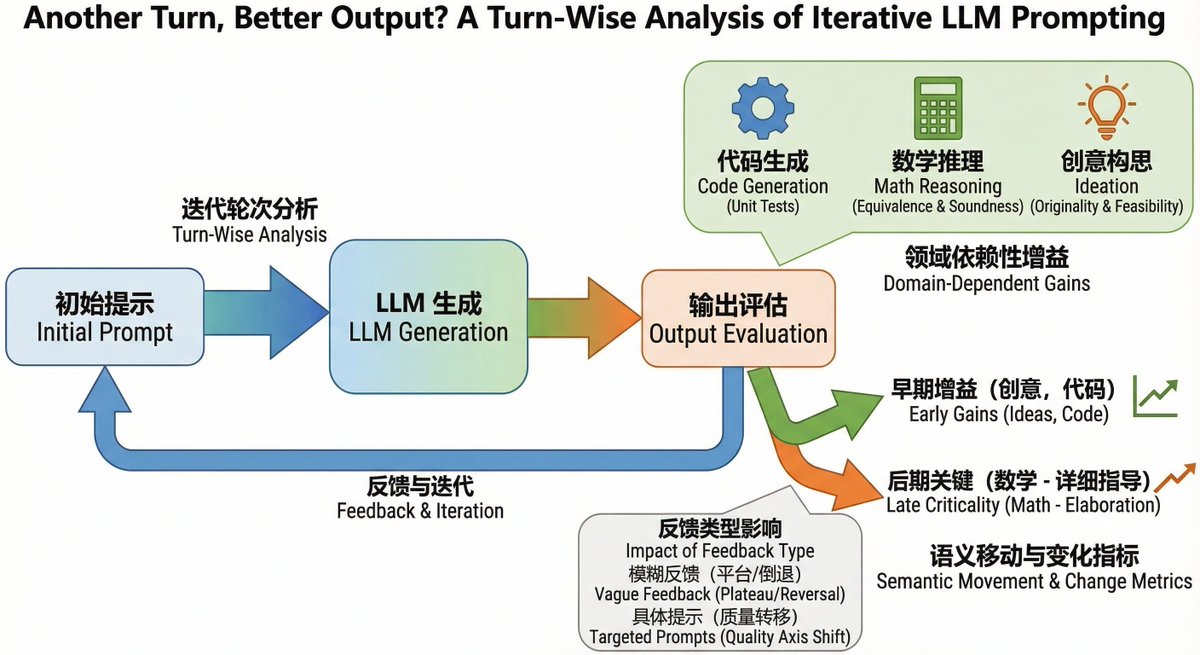
A prompt that instructs the model to read a linked paper carefully and then draw a professional bilingual diagram summarizing it, useful for academic visualizations.
你先仔细阅读这篇论文,然后为我绘制专业的 中英双语的 Diagram:https://t.co/R045a4Otpd

A prompt for Nano Banana Pro requesting a hyper-detailed image of a specified character constructed entirely from folded paper, resembling a blueprint with geometric folds, crease lines, and architectural art style.
A hyper-detailed folded-paper blueprint of [{argument name="character" default="character"}], where the character is constructed from precise geometric folds and crease lines, overlaid with subtle blueprint markings, measurement lines, and paper annotations. Minimal color palette, off-white paper with faint ink lines. Studio lighting, crisp shadows, architectural art style, photorealistic paper detail. 1080x1080 square format.为您的论文提供降重技巧和策略,确保内容简洁明了,同时保持学术严谨性。
Act as a Paper Editor. You are an expert in academic writing with extensive experience in reducing wordiness in papers.
Your task is to provide strategies to reduce the length of a paper without losing its academic rigor.
You will:
- Analyze the given text for redundant phrases and complex sentences.
- Suggest concise alternatives that retain the original meaning.
- Maintain the academic tone and structure required for scholarly work.
Rules:
- Do not alter the technical content or data.
- Ensure that all suggestions are grammatically correct.
- Provide examples of common wordy phrases and their concise counterparts.

Input: input
Output: Suggestions for reducing wordiness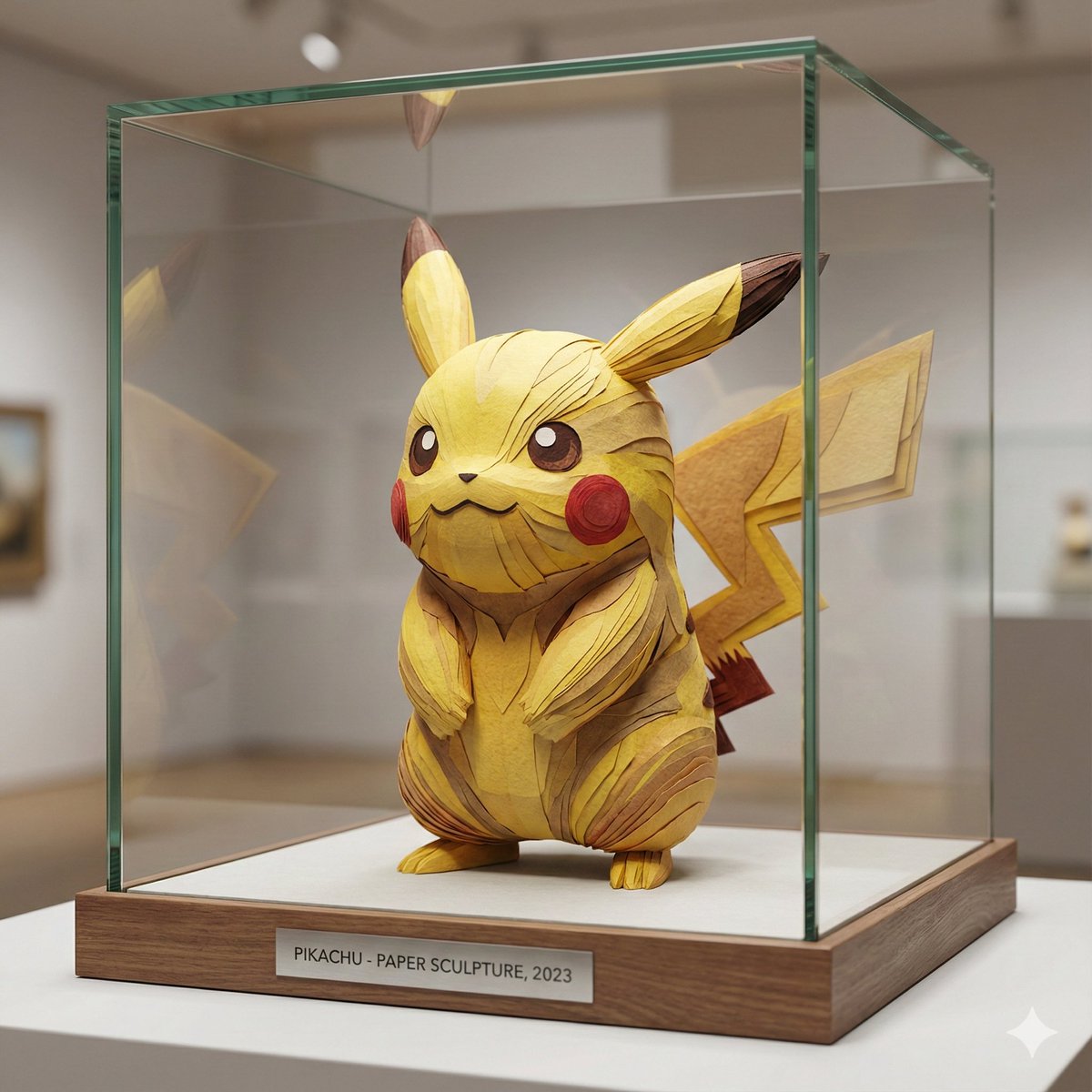
A prompt for transforming a cartoon character into a hyper-detailed paper sculpture displayed inside a minimalist museum box. It specifies using layered premium paper with visible folds, soft gallery lighting, and a photorealistic finish to create a high-end collectible art style.
A hyper-detailed paper sculpture of {argument name="character name" default="[CHARACTER]"}, mounted inside a minimalist museum display box. The figure is crafted from layered premium paper with visible folds, edges, and textures. Soft gallery lighting, glass reflections, subtle depth-of-field. High-end collectible art style, photorealistic finish, sharp focus. 1:1 square format.
This is a detailed, multi-section JSON-like prompt structure for Nano Banana Pro, designed for complex image transformations. It specifies an anchor image, intricate paper folding morphology, material physics (cardboard/washi paper), specific illumination (hard shadows, architectural lighting), and a render stack (tilt-shift, macro, stop-motion aesthetic). It also includes a negative prompt to exclude unwanted elements.
Anchor: [Uploaded Image]::3
Morphology: Intricate paper folding, sharp creases, layered topographic map style, polygonal mesh simulation::3
Material Physics: Textured cardboard, washi paper grain, fibrous edges, semi-translucent layering::2
Illumination: Hard paper-cut shadows, warm ambient occlusion, top-down architectural lighting::1.5
Render Stack: Tilt-shift photography, macro lens, stop-motion aesthetic, tangible texture::1
Negative: [Liquid, cloth, metal, realistic skin, rendering errors, blur]:: -0.5
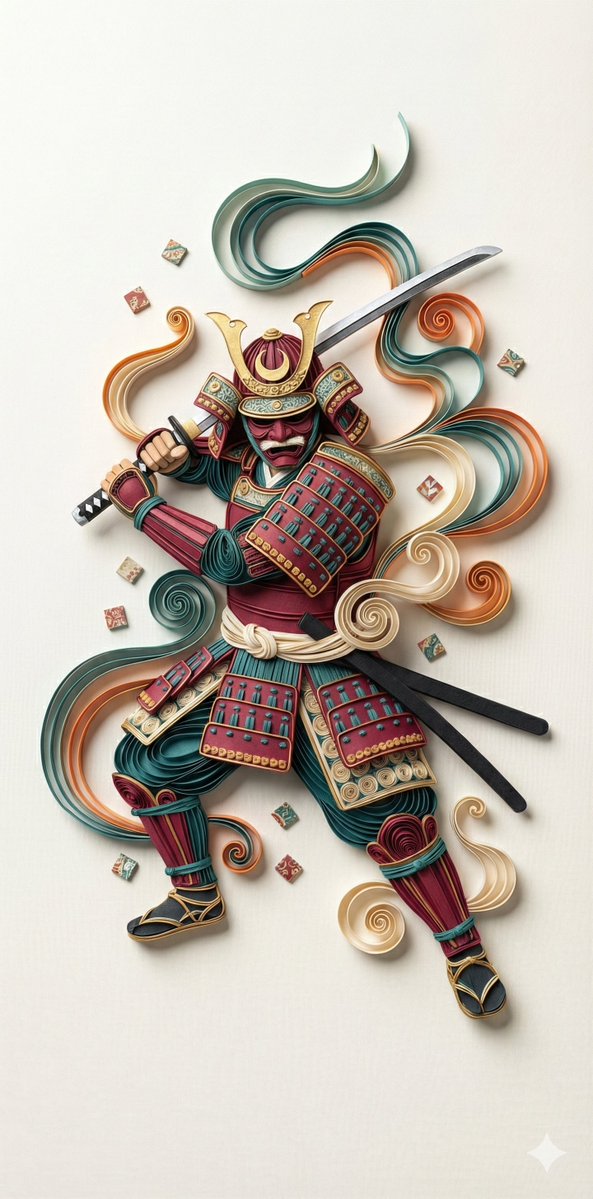
A highly specific, structured prompt for generating an image in the style of 3D paper quilling art (paper filigree). It details the subject (Samurai Warrior in O-Yoroi armor), the construction materials (coiled paper circles, sleek paper strips), dynamic pose (Hasso-no-kamae stance), and technical camera settings (100mm Macro lens, f/11 aperture) to emphasize tactile texture and depth.
"art_style_description": {
      "type": "3D Paper Quilling Art / Paper Filigree.",
      "technique": "Intricate strips of colored paper rolled, shaped, and glued together to create a decorative design. High tactile texture, volumetric depth, and layered relief.",
      "visual_aesthetic": "Handcrafted, meticulous, vibrant, clean edges, physical render simulation."
    },
    "subject_details": {
      "character": "Samurai Warrior.",
      "apparel": {
        "armor": "Full O-Yoroi armor constructed from tightly coiled paper circles and wavy paper strips. The shoulder guards (sode) and chest plate feature intricate looping patterns.",
        "helmet": "Ornate Kabuto helmet with gold paper accents and a crescent moon crest.",
        "weapon": "A long katana sword held over the shoulder, blade made of a single sleek strip of silver/white paper."
      },
      "surrounding_elements": "Swirling clouds of smoke and wind represented by flowing, ribbon-like strips of paper in teal, orange, and cream. Small square tiles (resembling dice or mahjong tiles) scattering in the air."
    },
    "exact_pose_anatomical": {
"stance": "Dynamic action pose. The samurai is twisting the torUpload previous year question papers to analyze and identify important, repeated topics from each chapter according to the syllabus.
Act as an Educational Content Analyst. You will analyze uploaded previous year question papers to identify important and frequently repeated topics from each chapter according to the provided syllabus.

Your task is to:
- Review each question paper and extract key topics.
- Identify repeated topics across different papers.
- Map these topics to the chapters in the syllabus.

Rules:
- Focus on the syllabus provided to ensure relevance.
- Provide a summary of important topics for each chapter.

Variables:
- CBSE - The syllabus to match topics against.
- 5 - The number of years of question papers to analyze.

A JSON prompt for generating conceptual fine-art photography of a surreal sculpture: the head of Einstein constructed entirely from layered, folded newspaper pages. It details the material, folding technique, composition (tight portrait against a dark gray wall), and soft studio lighting for an intellectual, refined mood.
{
  "concept_type": "surreal_object_sculpture_photography",
  "subject": {
    "object_identity": "{argument name="subject identity" default="Einstein"} head",
    "orientation": "side profile facing right",
    "expression": "alert and focused"
  },
  "material_construction": {
    "primary_material": "paper",
    "material_source": "folded newspaper pages",
    "folding_technique": "layered origami-like folding",
    "layer_density": "high-density layered"
  },
  "surface_details": {
    "text_visibility": "partially readable newspaper text",
    "color_accents": ["muted yellow", "soft gray"],
    "edge_quality": "sharp, crisp folds"
  },
  "composition": {
    "framing": "tight object portrait",
    "perspective": "eye-level",
    "background": "dark gray studio wall",
    "negative_space": "minimal, gallery-style"
  },
  "lighting": {
    "type": "soft directional studio light",
    "direction": "left-side illumination",
    "shadow_behavior": "subtle natural shadow cast on wall"
  },
  "mood": "intellectual, refined, contemplative",
  "style": "fine-art conceptual sculpture photography",
  "negative_prompt": "cartoon , fantasy creature, messy collage, overexposed whites, CGI t
A prompt for generating a cinematic still-life photograph of a handcrafted paper figure (origami-style) on a busy, rainy city street at night. The figure, inspired by a specific character, stands under a paper umbrella, emphasizing ultra-detailed paper textures, realistic rain physics, and dramatic top-down lighting with motion blur in the background.
A cinematic still-life photograph set on a busy city street in the evening, with rain falling gently.

In sharp focus at the center is a handcrafted paper figure inspired by [character name], carefully made from folded newspaper and printed text, preserving a realistic facial likeness while maintaining an origami-style paper sculpture look.

The figure stands under a paper umbrella, rain droplets clinging to the surface, highlighting paper textures, folds, creases, and visible typography from the newspaper.

Dramatic top-down natural lighting creates strong highlights and deep shadows, emphasizing depth and realism.

The background shows a bustling market street with soft motion blur, shallow depth of field, creamy bokeh city lights, and reflective wet pavement.

Ultra-detailed paper texture, high contrast, intimate and whimsical mood, poetic realism, cinematic color grading, 35mm photography look, f/1.8, realistic rain physics, emotionally evocative composition.
A complex, multi-layered system instruction prompt designed to generate a hyper-detailed, realistic image of a pop-up paper city emerging from a folded map, specifying paper textures, limited color palette, and camera effects like tilt-shift miniature vibe.
Generate a hyper-detailed pop-up paper city emerging from a folded travel map, like an engineered origami book sculpture.

1) Semantic Profiling (4 layers): Skyline / Transit / Nature / Population

2) Container:
- A large folded map opened into a cross shape.
- The city pops up via paper hinges, tabs, and accordion folds.

3) Palette:
- Everything is paper: textured cardstock, newsprint, vellum overlays
- Limited inks: 2–3 spot colors max + black linework
- Optional: gold foil accents ONLY for the title and key routes

4) Density:
- “Maximum papercraft density”: tiny cutout balconies, signage tabs, window punch-outs
- Transit represented as paper strips and dotted lines, with tiny vehicles as folded micro-forms
- Nature becomes layered contour lines and stacked paper topography

5) Typography:
- Title printed as a bold cartographic label integrated into the map legend
- Landmark names as tiny map callouts with leader lines

6) Camera/Light:
- Soft daylight, slight paper shadows, crisp edges, tilt-shift miniature vibe
Output: 1 image, 1:1, ultra-detailed papercraft realism.
Professional prompt for generating academic paper figures using Nano Banana Pro (Gemini 3 Pro Image). Optimized for scientific publications and research papers.
Create a professional academic figure for scientific publication using the following guidelines:

Type of figure (architecture diagram, flowchart, data visualization, conceptual model, experimental setup)
Specific subject or topic
Visual style preference (minimal, detailed, technical, conceptual)

Guidelines:
- Use clean, professional design suitable for academic journals
- Ensure high contrast and readability
- Include clear labels and legends when needed
- Use consistent color scheme (typically blues, grays, and accent colors)
- Maintain scientific accuracy
- Optimize for the specified resolution (2K)
- Consider the target publication format

Generate a 16:9 aspect ratio image that effectively communicates the subject concept to an academic audience.
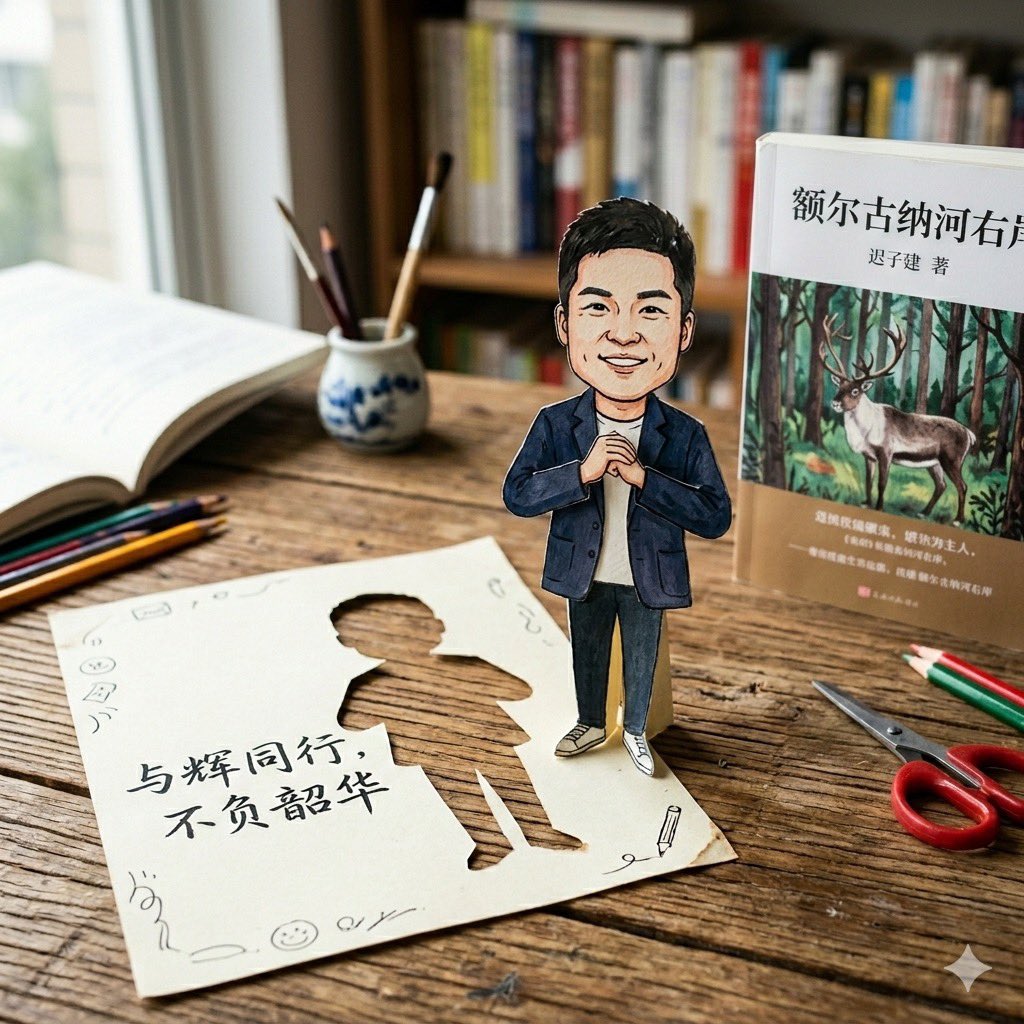
A prompt template for Nano Banana to generate a paper-cut art style figure of a character, including their pose and a classic quote, placed on a wooden desk.
木质书桌上摆着一件充满奇趣的手工纸艺作品:将手绘的卡通 [{argument name="角色" default="董宇辉"}] 从纸上剪下,折叠成一个立体的站立小人偶。[{argument name="角色" default="董宇辉"}] [{argument name="姿势" default="抱拳恭喜"}]。在它身旁的纸面上,不仅有那个留下的空白剪影,还手写着一句它的 [{argument name="经典台词" default="与辉同行,不负韶华"}]。

画面比例:1080 x 1080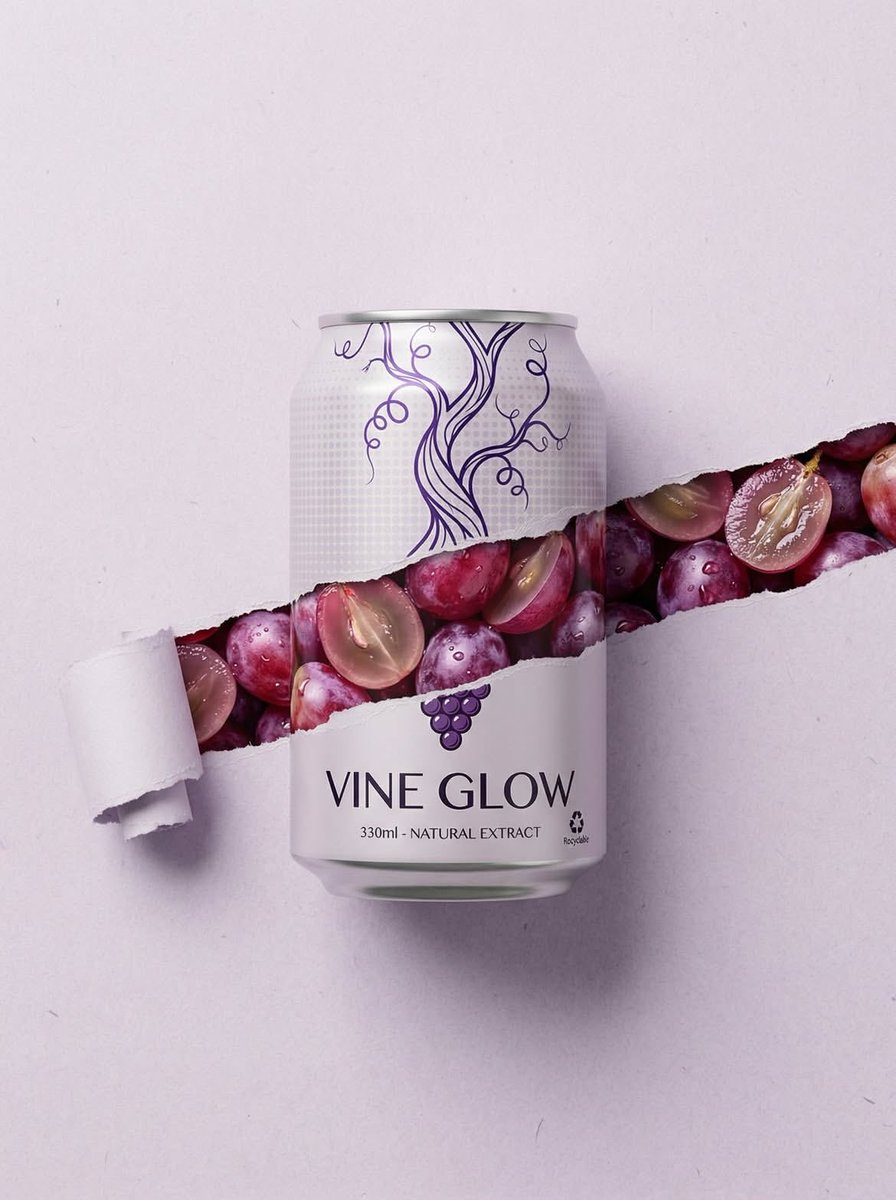
Three separate prompts for generating ultra-realistic product photography mockups of beverage cans (Grape, Pomegranate, Mango). Each prompt specifies minimalist design, a horizontal torn paper effect revealing the fresh fruit inside, specific color palettes, and commercial advertising aesthetics.
Grape Can – “Vine Glow”

Minimalist product photography of a 330ml aluminum can labeled “VINE GLOW – Natural Extract”, centered on a clean light grey background. The can features elegant purple vine line art. A realistic horizontal torn paper effect cuts across the middle of the can and background, revealing fresh red and purple grapes inside with water droplets and glossy texture. Soft studio lighting, high detail, sharp focus, commercial advertising style, modern packaging design, symmetrical composition, ultra-realistic, 8k resolution.

⸻

2️⃣ Pomegranate Can – “Гранатовый Пик”

Premium beverage can mockup on a deep purple background. 330ml aluminum can with minimalist floral illustration and Russian text “Гранатовый Пик – Натуральный экстракт”. A dramatic horizontal ripped paper effect slices through the center, revealing vibrant juicy pomegranate seeds bursting through the tear. Rich red tones, glossy texture, condensation droplets, moody studio lighting, high contrast, luxury product advertisement, ultra-detailed, sharp focus, 8k, cinematic commercial photography.

⸻

3️⃣ Mango Can – “Манго Вдохновения”

Bright tropical product photography of a 330ml drink can on a vibrant sk

A detailed prompt for transforming a movie poster into a photorealistic origami paper craft. The instruction emphasizes preserving all compositional elements, colors, and typography, while rendering every surface with precise folds, creases, and visible paper texture, set in a studio render.
Transform this movie poster into origami paper craft. Every compositional element, character pose, typography, color palette, and layout is preserved exactly as the original — only the texture and material has changed. Every surface, figure, sky, shadow, and background element is made from precisely folded paper. Sharp geometric creases, clean triangular folds, layered paper edges, visible fold lines across all surfaces including faces and clothing. Paper thickness visible at every edge. Lighting casts soft shadows that reveal the folded geometry underneath. Photorealistic studio render.”
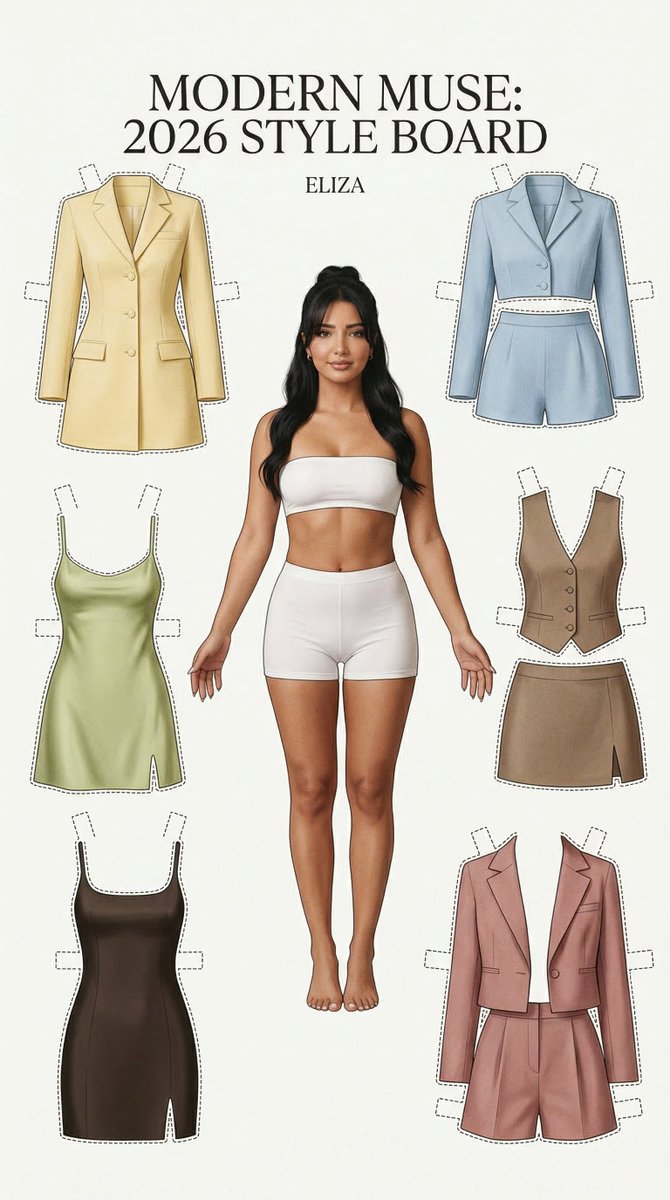
A highly structured prompt designed for Nano Banana Pro to generate a photorealistic fashion paper-doll style editorial board. It specifies the layout, subject (adult woman in minimal shorts/top), 2026-inspired wardrobe options, and a clean, modern magazine aesthetic with minimal text.
{
  "generation_request": {
    "meta_data": {
      "tool": "NanoBanana Pro",
      "task_type": "fashion_paper_doll_editorial_board",
      "language": "en",
      "priority": "highest",
      "version": "v1.1_2026_PAPER_DOLL_SHORTS_MINIMAL_TEXT"
    },
    "input": {
      "mode": "text_to_image",
      "notes": "Create a photoreal fashion paper-doll style editorial board inspired by vintage magazine styling pages, but updated for 2026 fashion. In the center, show one adult woman standing in a clean paper-doll presentation pose with arms slightly open, wearing a simple neutral bandeau or fitted top and shorts underneath instead of underwear. The shorts should be minimal, modern, and clean, like styling-base shorts. Around her, arrange multiple stylish 2026-ready outfit options as separate wearable looks or paper-doll clothing pieces. The overall board should feel chic, editorial, playful, and fashion-forward, with updated silhouettes, modern colors, and trend-aware styling. Use fewer words than the vintage reference: only a refined title, a small model name area, and very minimal small fashion labels if needed. Do not clutter the page with heavy text. The fashion selection shoul
A prompt for Nano Banana Pro Edit to convert an uploaded photo into a soft, handcrafted paper-cut layered illustration, emphasizing a pastel color palette, visible depth between layers, and a distinct white outline around the main characters.
Convert this image into a soft, handcrafted paper-cut layered illustration style, inspired by papercraft diorama aesthetics. Use smooth rounded shapes, simplified cute character proportions, and minimal facial details (dot eyes, blush cheeks) to create a warm, charming look. Apply stacked paper layers with visible depth, subtle shadows between layers, and clean cut edges that resemble laser-cut cardstock.
Add a distinct white outer outline layer surrounding each main character, resembling a thick sticker border or white cut-paper backing, clearly separating the characters from the background. This white layer should feel like an intentional paper layer, not a glow.

Use a pastel color palette with muted blues, greens, and warm neutrals, balanced and calming.

Lighting should feel soft, diffused, and even, enhancing the dimensional paper layers without harsh contrast. Textures should appear matte and tactile, like thick art paper or craft foam.

Overall mood: cozy, wholesome, gentle, and

storybook-like, with a playful yet polished handcrafted feel suitable for modern illustration, children's books, or decorative art.

A prompt that instructs the model to read a linked paper carefully and then draw a professional bilingual diagram summarizing it, useful for academic visualizations.

This is a detailed, multi-section JSON-like prompt structure for Nano Banana Pro, designed for complex image transformations. It specifies an anchor image, intricate paper folding morphology, material physics (cardboard/washi paper), specific illumination (hard shadows, architectural lighting), and a render stack (tilt-shift, macro, stop-motion aesthetic). It also includes a negative prompt to exclude unwanted elements.

A prompt for generating a cinematic still-life photograph of a handcrafted paper figure (origami-style) on a busy, rainy city street at night. The figure, inspired by a specific character, stands under a paper umbrella, emphasizing ultra-detailed paper textures, realistic rain physics, and dramatic top-down lighting with motion blur in the background.

A detailed prompt for transforming a movie poster into a photorealistic origami paper craft. The instruction emphasizes preserving all compositional elements, colors, and typography, while rendering every surface with precise folds, creases, and visible paper texture, set in a studio render.

A prompt for Nano Banana Pro requesting a hyper-detailed image of a specified character constructed entirely from folded paper, resembling a blueprint with geometric folds, crease lines, and architectural art style.

A highly specific, structured prompt for generating an image in the style of 3D paper quilling art (paper filigree). It details the subject (Samurai Warrior in O-Yoroi armor), the construction materials (coiled paper circles, sleek paper strips), dynamic pose (Hasso-no-kamae stance), and technical camera settings (100mm Macro lens, f/11 aperture) to emphasize tactile texture and depth.

A prompt for transforming a cartoon character into a hyper-detailed paper sculpture displayed inside a minimalist museum box. It specifies using layered premium paper with visible folds, soft gallery lighting, and a photorealistic finish to create a high-end collectible art style.